


Residents in the future may require an echocardiogram to check for any issues with their heart. Despite the procedure in itself not being dangerous, the process of transporting residents, especially elderly residents or those with health conditions, to a hospital environment poses serious risks.
A 2026 study published in the journal Age and Ageing, led by University of Sheffield researchers and using data from more than 40,000 care-home residents in England, found that age and frailty were significant predictors of hospital admissions, with substantial variation between areas.
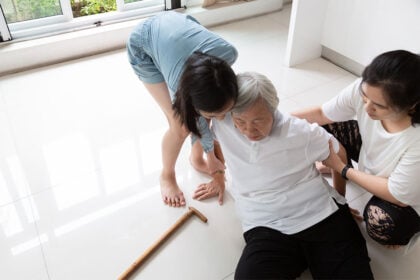
Caregivers therefore face a difficult choice: sending vulnerable residents to hospital for tests that may be necessary to assess their heart health, despite the potential risks associated with the journey.
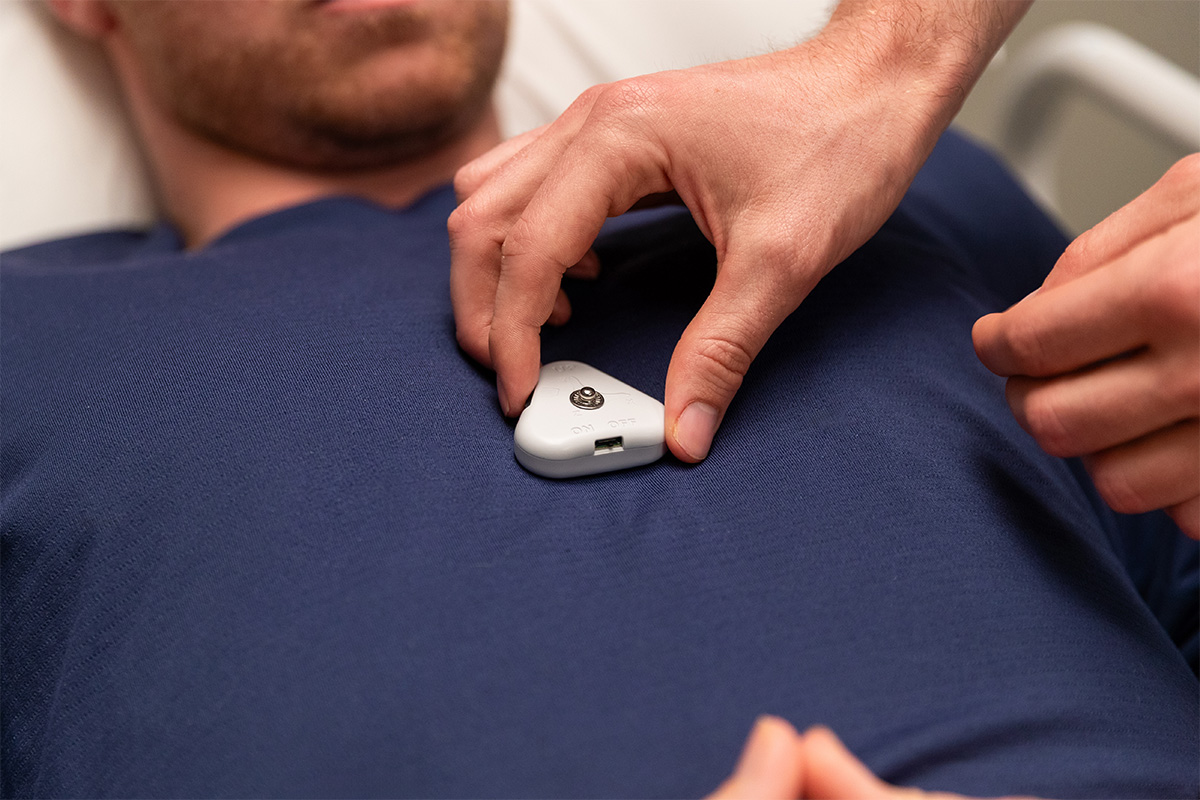
LLA Technologies, the Canada-based medical device company, says its technology, called Recordis, could help residents receive the cardiac assessments they need without leaving their care home.
David Loban, CEO and president of LLA Technologies, says the technology can be used anywhere, making it suitable for care and residential homes.
“Accessibility is key. That one-minute test can provide the same level of comprehensive data that you would otherwise have to go to a hospital to obtain, without the wait times, costs, and everything else associated with hospital testing,” he says.
“There’s a growing need for at-home testing and testing outside of hospitals, particularly because hospitals are becoming increasingly clogged, with patients even being treated in corridors. The whole industry is looking for ways to test outside of the hospital and relieve that strain,” he says.
A breakdown of the technology
In order to understand how Recordis works, Loban breaks down how the heart works and generates seismic signals.
“As the heart beats, it goes through around 14 mechanical movements. The aortic valve opens and closes, the mitral valve opens and closes, and the heart twists and untwists within the chest,” he says.

Recordis measures these tiny vibrations that the heart creates. Through this, the device records how strongly the heart is moving, how quickly different parts of the heart pump, and whether the timing between those is normal.
“We use algorithms, acceleration graphs, and other analytical tools to create a three-dimensional model of the heart. We measure its movement east to west, north to south, and forwards and backwards, generating a three-dimensional dataset,” Loban says.
He continues: “From that dataset, we derive around 120 biomarkers from every heartbeat. Through our research, we’ve identified patterns associated with specific conditions, ranging from PTSD and occupational stress to diabetes and cardiovascular disease.”
“But our ability to model the heart’s three-dimensional movement and extract meaningful data from those signals is what makes the technology unique,” he says.
Clinicians are then provided with insights on a patient and can track whether there is a particular condition to monitor and even identify signs of disease earlier, the company says.
“We don’t want people to wait until they’re experiencing symptoms or have entered a disease state. We want to get ahead of that through prevention, while still supporting those who already have existing conditions.”
“Traditional tests often identify problems after someone is already ill. We’re trying to bring cardiac assessment much earlier into the care pathway and make healthcare more preventive than reactive,” he says.
Why care homes?
Loban says that the ability to do a Recordis test in the care home and send the results to the doctor is valuable.
“If the results are serious, then of course you go through the logistics of sending the patient for an echo,” he says.
“The clinical or nursing staff on site can do it in one minute. It’s non-invasive, and the patient doesn’t have to be moved around,” he says.
“As I say, for the elderly population, an echo can be quite an involved procedure. You have to move around and be reasonably mobile. And how do you stress-test somebody in a care home environment?”
He also notes that individuals who are older are more likely to need testing on their heart.
“We’ve always identified care homes as a potential market for us. I think it’s a unique fit,” he says.
Loban says the portability of Recordis could also allow clinicians to build a longer-term picture of a patient’s heart health, rather than relying on isolated tests.
“That’s what makes portability and repeatability so important. It allows you to see how the heart changes over time and potentially act before disease develops,” he says.
Loban says that undisclosed hospitals across the US and Canada, as well as an undisclosed cardiology lab in Montreal, have partnered with Recordis.
The technology has also been used in several research projects and has received support from clinical institutions.
The technical challenge
Loban says an engineering challenge with the technology was the signal processing. Because the signals are small and the body contains a lot of ambient noise, it can be hard to distinguish this from the heart.
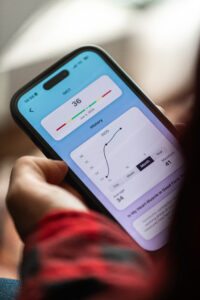
“The challenge is identifying precisely when things like the aortic and mitral valves open and close and extracting that useful information from all the background noise,” he says.
“The real innovation is in the signal processing and algorithms we’ve developed. They allow us to isolate those signals, make the results repeatable, and produce data that is clinically viable and validated.”
“The intellectual property lies in how we process that data and turn it into something actionable for clinicians,” he adds.
In addition, making the results accessible for healthcare professionals also posed a challenge.
“The reporting platform has to present the data in a way that can be interpreted by a GP or nurse practitioner, rather than requiring a cardiologist to review every test,” he says.
“Making complex cardiac data clinically useful and easy to understand has been a key part of the development process.”
Though there are many seismocardiography companies, Loban says that Recordis’ focus on accuracy and reliability is what makes it stand out.
“Many competing technologies have struggled to gain traction in hospital environments because questions remain around accuracy and reliability,” he says.
“Outside of that, much of the technology coming to market is ECG-based and focused on heart-rate monitoring,” he says.
He says that Recordis’ ability to track the heart before it reaches a disease state is the key differentiator.
“Our approach is different because we’re collecting a much broader set of data about the heart’s mechanical function. That allows us to look beyond heart rate alone,” he says.
For more caretech news, check out the other articles on the website, and for more information please email us at roshini.bains@starmediaservices.co.uk