


Therapeutic robots are being explored as a way to reduce anxiety and encourage interaction among people with dementia and learning disabilities. Early accounts suggest they can make a difference, but the evidence remains limited.
When a woman with dementia began interacting with a robotic seal at her kitchen table, the change was not measured in clinical outcomes but in the small practical difference it made to her daughter’s morning routine.
“Before, my mother could not sit still and wait while I cooked breakfast. She would walk around the kitchen while being oblivious to the hot stove and pans. I could not focus on cooking. I need to keep an eye on my mother, where she was, what she was touching,” says one carer included in a small Japanese study. “So, I placed [the robot seal] on the dining table. What surprised me was that my mother was able to engage with [it]. She talks to [the seal] saying, “What a good boy, cute boy!.. Yes, I hear you, dear… Where do you want to go?” she said, gently patting him.
Another family described a woman who had previously been reluctant to welcome community care workers into the house but became more accepting of their visits after the robot arrived. Her son said she began keeping the seal beside her and had started thanking care workers as they left.
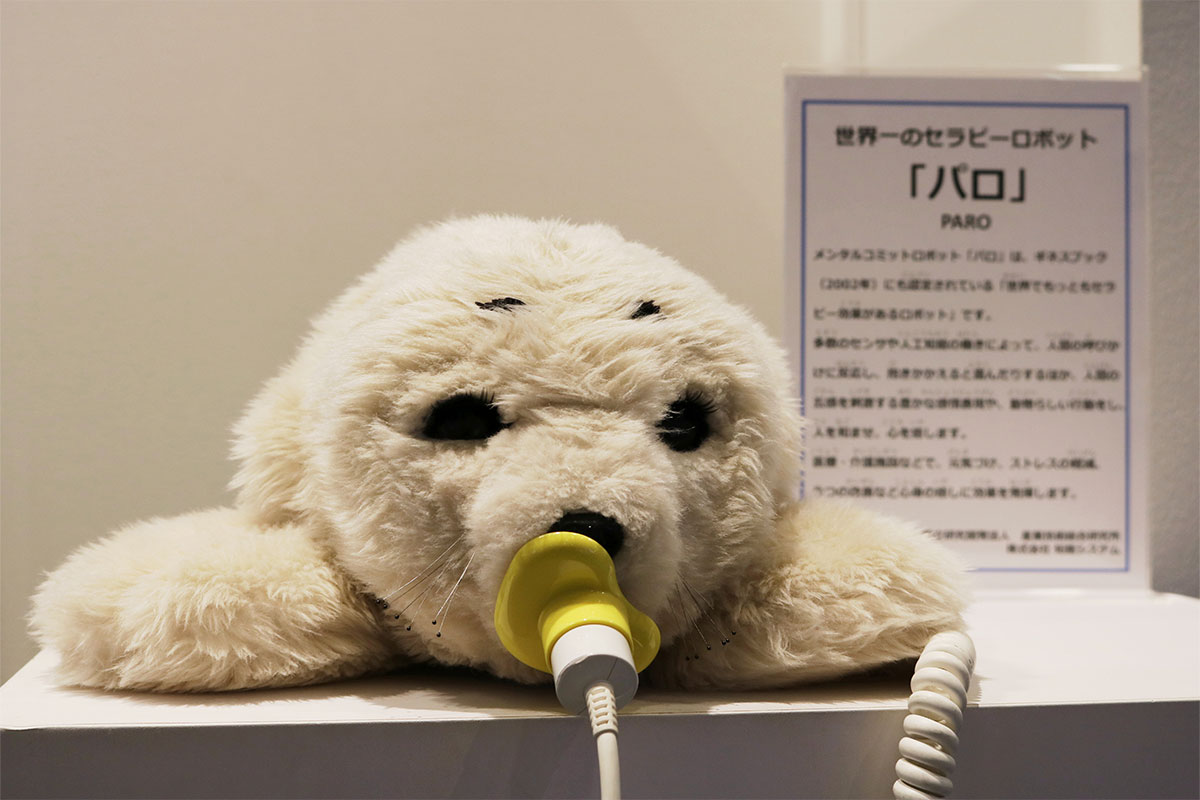
Certainly, with huge eyes and cuddly fur, the robots in question are designed to look as cute and appealing to patients as possible. But beneath its fluffy exterior, the robot, branded PARO, is far more than a toy. Using a basic form of AI, the robot is able to respond to being spoken to or to being physically stroked, enabling vulnerable patients to interact with the machine wordlessly.
Such examples help explain the interest in therapeutic robots, which are being developed not to carry out clinical tasks or replace care workers, but to encourage engagement, provide reassurance, and create opportunities for interaction. Their potential lies in the way they respond to people, offering a focus for attention that may make an unfamiliar or stressful situation easier to navigate.
PARO is now being tested in a different care setting in the UK. Kent and Medway Mental Health NHS Trust announced in May that it was piloting the robot in its learning disability outpatient services, exploring whether it could make appointments more comfortable and accessible for people who find clinical environments overwhelming. The project raises a broader question for health and social care providers: whether responsive technologies can support more person-centred care, particularly for people who may struggle to communicate their needs in conventional clinical settings.
“Many of the people we support find clinical environments overwhelming, which can make it harder for them to take part in reviews and share what matters to them. PARO offers a gentle, person-centred way to help people feel more settled and engaged, so we can focus on their needs,” said Dr Sharna Bennett, Senior Resident Doctor at Kent and Medway Mental Health NHS Trust. “It supports the reasonable adjustments we already make to improve care.”
Developed by Japan’s National Institute of Advanced Industrial Science and Technology (AIST), PARO makes use of sophisticated IoT technology. Beneath its fur is a network of sensors designed to detect and respond to its surroundings, including tactile sensors that register stroking and touch, microphones that pick up voices, and sensors that monitor light, temperature, and the robot’s position.
The information is processed by an onboard control system, which drives motors and actuators in the robot’s head, neck, eyelids, and flippers. PARO can move in response to being touched, open and close its eyes, and produce sounds modelled on those of a baby harp seal. It can also recognise its name and adapt aspects of its behaviour through repeated interactions, giving the impression of an animal responding to attention rather than a toy repeating a fixed sequence of movements.
According to Takanori Shibata, Chief Senior Researcher at Japan’s Human Technology Research Institute, part of AIST, who has worked on the robot since 1993, PARO’s appearance was a deliberate design decision.
“While I was investigating [new robotics markets] I found it was well known in the US and Europe that animal therapy that includes interaction with animals improves the condition of inpatients, the elderly, and children alike,” Shibata said in a company interview. “However, it is difficult for caregiving facilities to keep animals for reasons such as hygiene, safety, and management. Robots might, therefore, be useful for methods such as animal therapy.”
The developers chose a seal partly because people are less likely to have established expectations about how one should behave than they might about a dog or cat. The intention was to make the robot easier to accept as an interactive companion, without requiring users to understand how it works or learn a particular way of operating it.
This combination of sensory input, movement, and sound is central to PARO’s therapeutic proposition. Rather than relying on a screen or a set of instructions, it uses familiar forms of interaction – touch, speech, and apparent social response – to encourage people to engage with it.
A seal of approval?
The study, published in ‘Palliative Care and Social Practice,’ followed seven households in Japan in which a family member with dementia used PARO at least three times a week over a period of one to three months. Five participants responded positively and achieved goals identified by their families, including greater engagement in activities, relaxation, improved mood, and respite for carers.
The researchers’ findings suggest that the value of the robot may extend beyond the person using it. In one household, a conversation about PARO prompted a woman to speculate that the seal might have come from somewhere cold. Her daughter was struck by the exchange, reflecting that “maybe my mother understands more than I give her credit for.”
In another, the robot appeared to make a woman more comfortable with the presence of visiting care workers, easing a source of tension for her family.
These are subjective accounts rather than evidence of a measurable improvement in cognitive function, and the researchers found little or no change in some standardised measures. They, nevertheless, point to aspects of care that can be difficult to capture through conventional assessments, including the quality of interaction between a person with dementia and their family, and the opportunity for carers to step back from constant supervision.
Testing the waters
The Kent and Medway NHS Trust pilot is examining whether a similar approach could help people with learning disabilities take part in outpatient appointments. For some patients, clinical environments can cause anxiety, making it harder to communicate, participate in reviews, or explain what matters to them. The Trust is investigating whether PARO could provide a calming focus during appointments and help patients feel more settled.
“Many of the people we support find clinical environments overwhelming, which can make it harder for them to take part in reviews and share what matters to them,” said Dr Sharna Bennett, Senior Resident Doctor at the Trust. “PARO offers a gentle, person-centred way to help people feel more settled and engaged, so we can focus on their needs. It supports the reasonable adjustments we already make to improve care.”
The pilot will gather feedback from patients, carers and staff, and assess appointment engagement, observed anxiety levels, and the experiences of those involved. The Trust has stressed that the robot will not be suitable for everyone; the purpose of the project is to understand who might benefit, as well as identify any limitations or concerns. If the results are encouraging, it may consider whether PARO could be used in other settings, including older adult inpatient services.
PARO is not an entirely new proposition for UK care services. Previous work at the University of Brighton, in collaboration with Sussex Partnership NHS Foundation Trust, explored how the robot could be introduced into dementia care, including staff training, infection control, and identifying which patients might benefit.
The challenge, then, is not simply demonstrating that people respond to a robotic animal, but establishing how it can be used safely, sensitively, and consistently as part of everyday care. The Kent and Medway pilot offers another opportunity to examine that question, this time in learning disability services.
Ultimately, its value will depend not on how convincingly PARO behaves like an animal, but on whether it makes a demonstrable difference to the people using it. As Dr Penny Dodds of the University of Brighton observed: “What we need to understand is how to help take positive research findings into everyday care.”
For more caretech news, check out the other articles on the website, and for more information please email us at roshini.bains@starmediaservices.co.uk