


Pressure injuries associated with prolonged sitting remain a significant challenge in care homes, yet the issue receives relatively little attention.
A 2023 review in the International Journal of Nursing Studies, covering more than 355,000 older people, found that around one in nine nursing home residents had a pressure injury. The sacrum, at the base of the spine, was one of the most common sites.
Left untreated, pressure injuries can become deep wounds that lead to infection and, in rare cases, sepsis.
To combat this, Kalogon, a US-based startup, has developed a smart seating solution that aims to improve comfort and health for those who spend long periods sitting.
Timothy Balz, Co-Founder and CEO, provides more detail on how the technology works. He says the seats target specifically blood flow and tissue oxygenation.
“We recognised that sustained surface pressure can restrict blood flow to vulnerable tissues. Traditionally, people manage this through pressure relief by shifting their weight or tilting back to temporarily remove pressure and allow blood flow to recover,” he said.
“Our technology takes a cushion and allows us to control multiple zones independently, reducing pressure in specific areas. Independent laboratory testing has demonstrated that this approach can increase blood flow, similar to conventional pressure-relief techniques,” he says.
The smart sensing seat adapts to the user’s body and needs, according to Balz.
Supporting care homes
Balz says that care homes see a lot of pressure injuries which is why Kalogon’s technology can be a great fit for these environments.
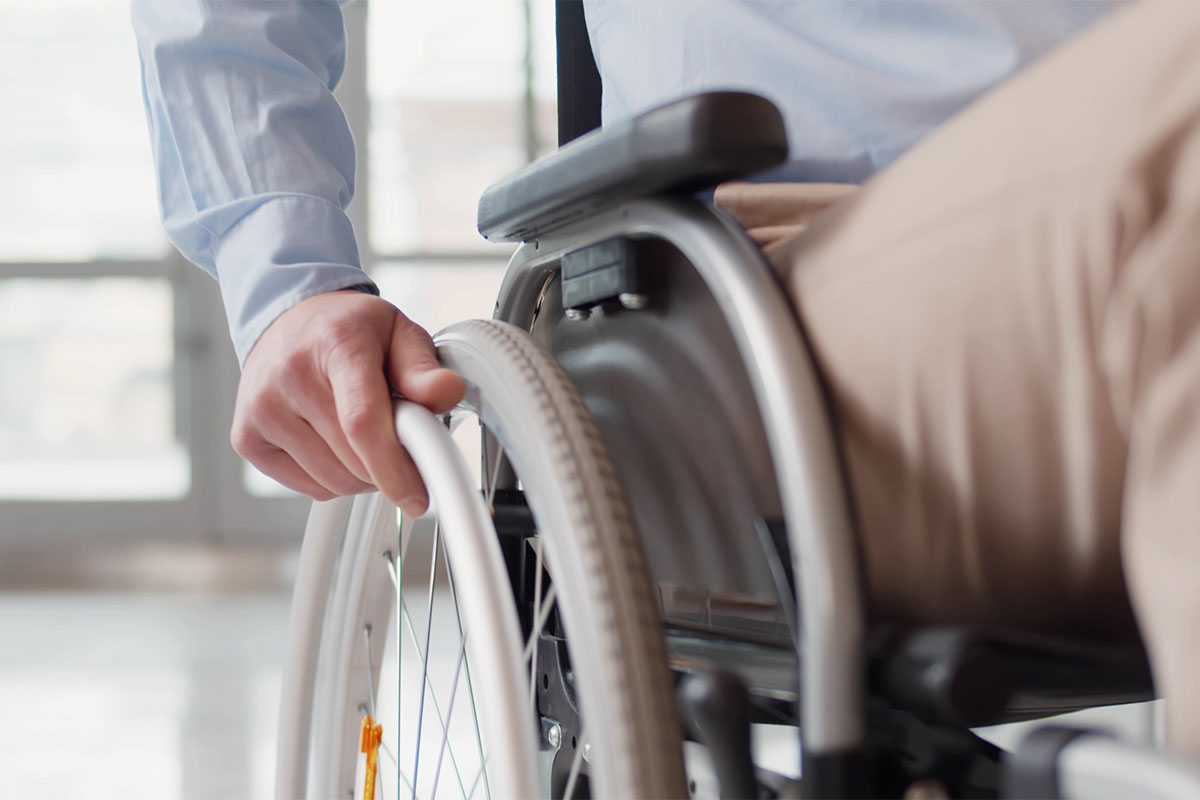
“Traditionally, preventing pressure injuries requires regular repositioning. For someone in bed, that might mean being turned regularly, while wheelchair users are often advised to perform pressure-relief manoeuvres approximately every 15 minutes,” he says.
He adds: “The challenge is that care staff simply don’t have the capacity to assist every resident with pressure relief that frequently, and many residents aren’t physically able to do it themselves.”
Balz says the technology not only gives residents a better quality of life but also gives carers and residents greater peace of mind.
“Ultimately, it’s about providing an additional layer of protection for vulnerable people, while helping address the practical challenges faced by carers in residential care settings,” he says.
The response from care homes
Kalogon has reportedly had a positive response from end users and care homes.
“We have built a product with a strong sense of user empathy,” he says.
“A lot of engineers start with an idea, develop it in the lab, and then bring a fully formed product to market. We took a different approach. We worked collaboratively with care homes, VA hospitals and spinal cord injury units to develop the technology alongside the people who would actually use it,” he says.
He says that initially the feedback wasn’t positive with people noting various improvements that were needed to the technology.
“But that was exactly why we wanted to involve customers throughout the development process: to listen, learn, and continuously improve the product based on their needs,” he says.
Kalogon’s first Medicare-approved product, Orbiter Med, has received a Special Mention in TIME’s Best Inventions of 2024 list, as well as winning the Early-Stage Innovation category The Hustle Awards in 2023.
“Today, we’re generating seven-figure revenue in the medical market, and that traction has helped us secure significant funding,” he says.
“What excites me most is that we’ve achieved this without being an AI-first company. We’re a people-first business. We put our customers above everything else and use whichever technologies deliver the best outcomes for them,” he says.
A case study
Balz offers a case study of an undisclosed care customer who used Kalogon’s technology. He was approached by a wound care doctor about a patient who was young but living in a care home with a pressure
The injury had left the female resident bedridden for a year.
“They’d tried everything, but the wound wasn’t progressing, and [the wound care doctor] wasn’t sure what else could be done to help the wound heal,” he says.
“The resident started using an earlier version of our product, which we’ve improved quite a bit since then. We provided the patient with one of our cushions, and at the time, she could only get out of bed for around 30 minutes to an hour a day for physical therapy. Any longer than that, and they were seeing the wound get worse,” he says
Balz says the resident started to see improvements in her room and he says she personally told him that she was able to walk for a few hours in the day.
“For me, that was just incredible. Here was someone who’d been on bed rest for over a year, and our technology had helped her get to a point where she could go out and enjoy a meal with her friends for the first time.”
Six to eight months later, the patient was able to leave the care home and live independently again – her wound achieved full closure and has not been reopened for nearly five years.
“From the wound care doctor’s perspective, it had seemed unlikely that she’d ever get past that wound. And yet, she went from being confined to bed in a care home to seeing her friends again, and ultimately, living independently,” he says.
Setbacks and the future
Balz says that the company overcame significant financial and reimbursement challenges through the founders’ personal sacrifices, a shared mission, aligned incentives, and a passionate team committed to delivering results for customers.
Balz says he is excited about the startup’s international expansion, especially with its growing success in the US.
“Our solution is not only one that works here in the US but one that can have a large impact overseas. So, that’s something that I think is going to be a major push for us,” he says.
Kalogon will also continue to invest in engineering, accelerate the rate of innovation in the wheelchair space, as well as trying to support people who generally suffer with pain when sitting.
“And there’s a lot of people out there that experience pain and discomfort from sitting. And you know we’re not going to stop until we help all of them sit safely and comfortably,” he says.
For more caretech news, check out the other articles on the website, and for more information please email us at roshini.bains@starmediaservices.co.uk