


Urinary incontinence is a significant challenge in care. A 2024 study of 132 residents across five nursing homes in Catalonia, Spain, found that 76.5% experienced urinary incontinence, which is linked to falls, infections and poorer quality of life.
Carers struggle with monitoring urinary issues because manual record-keeping relies on time-consuming staff observations. Also, staffing pressures and communication barriers between vulnerable patients mean that many of these issues can go unnoticed.
An Ithaca-based startup believes that its technology holds the answer to improved urinary monitoring.
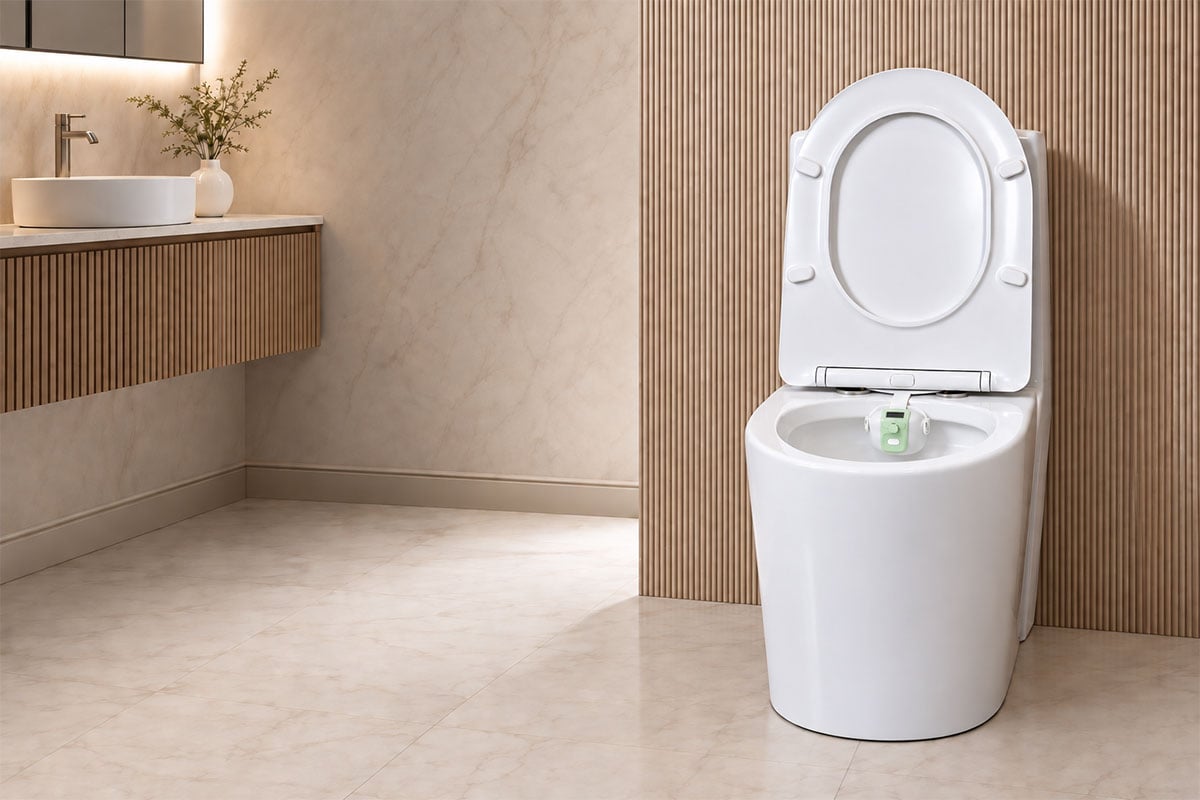
CareTech Human has developed a toilet-integrated sensor platform that monitors urine automatically. The device clips onto a toilet and uses contactless sensors to collect information from bathroom visits.
The information collected includes urination frequency, volume, flow, and other urine-related health signals. The data are processed to generate health insights and clinical reports.
Dan Matsui, CEO and Founder, says that the device contains a combination of sensing technologies built on affordable, off-the-shelf hardware.
“One of our technologies, ENOS, analyses the gaseous phase above biofluids, detecting volatile organic compounds (VOCs), ammonia, and other biomarkers that may indicate changes in health conditions or provide insights into disease,” he says.
“Our second technology analyses the oscillations of water in the toilet bowl during urination. By interpreting these signals, we can measure uroflowmetry, the rate and pattern of urine flow, which is a key tool used by urologists worldwide to assess urinary health.”
After the company was founded, CareTech Human quickly began developing the technology and building prototypes. In 2023, the company was invited to join the Cornell’s Center for Life Science Ventures business incubator in Ithaca.
Why a urology device?
Matsui says that the inconvenience around current urology testing is what motivated him to develop this type of technology.
“Patients typically have to visit a urology clinic, drink water, and urinate into a dedicated machine. It’s an inconvenient, uncomfortable, and often stressful process, which can affect the quality of the data collected,” he says.
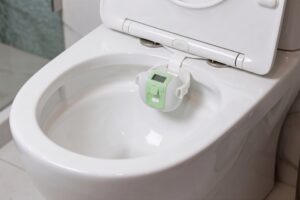
CareTech Human’s sensor provides a contactless way to capture this clinically important information, according to the startup.
Matsui also says there are very few solutions for urology monitoring on the market – making it harder for clinicians to make data-driven decisions.
“Unlike diabetes or cardiac health, where devices such as glucose monitors and Holter monitors provide objective data, urology still relies heavily on patients describing their symptoms subjectively, waking up more frequently in the night, or feeling increased urgency,” he says.
Matsui says he compares his technology to the “concept of a smoke detector in a house,” because once you install the device you only need to charge it occasionally.
“It works in the background, providing an additional layer of protection without requiring constant attention. That’s exactly what we wanted to achieve with our device: a simple, unobtrusive tool that continuously helps people monitor their health as part of everyday life,” he says.
Industry response and competitors
There are other smart toilet sensors on the market, like Throne Science, but these competitors tend to measure urinary flow and data differently.
Throne Science, in particular, focuses on visual and acoustic signals. CareTech Human, on the other hand, assesses gaseous biomarkers to provide another layer of information.
“Frankly, I would love to see more competitors in this market, because the smart toilet market is still relatively underdeveloped. There are a few companies entering the space, but we haven’t yet seen widespread adoption,” he says.
Matsui says that he views other companies less as competitors and more as a collective to help improve information and support around urology and continuous health-monitoring.
“Ultimately, the more technologies we have working together, the more pieces of the puzzle we can put together to build a more comprehensive picture of someone’s health.
“I think that’s where the real opportunity lies, not in competing for the same data, but in combining different technologies to unlock insights that none of us could deliver alone,” he says.
CareTech Human has since received positive recognition from the industry including winning €20,000 cash grand prize at the Infoshare 2022 Startup Contest in Gdańsk, Poland.
The care setting
Matsui says that nursing homes, senior care, and assisted living facilities are an interesting avenue for the startup.
“We’re actively exploring this market and have already set up several pilot projects that we’re now looking to run in the US,” he says.
In a care-home setting, this type of monitoring could help staff identify changes in a resident’s urination patterns that might otherwise go unnoticed.
For example, changes in urinary frequency or flow could prompt carers to raise concerns with a healthcare professional. The technology could also provide a more consistent record of bathroom visits, reducing reliance on manual observations.

Despite the obvious benefits of implementing this technology into the care setting, according to Matsui there are notable complexities in this sector that can pose a challenge.
“There are several important questions we need to resolve: Who pays for the technology? Who owns the data? Who is responsible for reviewing the results and acting on the insights? How do we structure the partnership so that it creates value for everyone involved?”
Though the medical implementation is substantial, from a business standpoint scaling the technology is potentially the biggest hurdle.
Matsui, however, has hope that the company will overcome these challenges and grow exponentially over the next five years.
“I see CareTech Human becoming a successful company with hundreds of thousands of devices deployed across different markets and serving a variety of use cases,” he says.
“Ultimately, my mission is to improve the quality of life of millions of people around the world.”
For more caretech news, check out the other articles on the website, and for more information please email us at roshini.bains@starmediaservices.co.uk