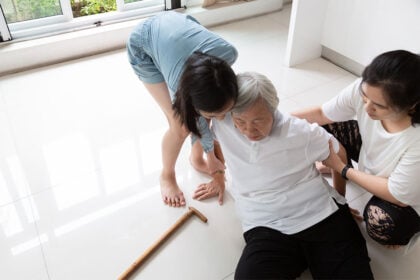


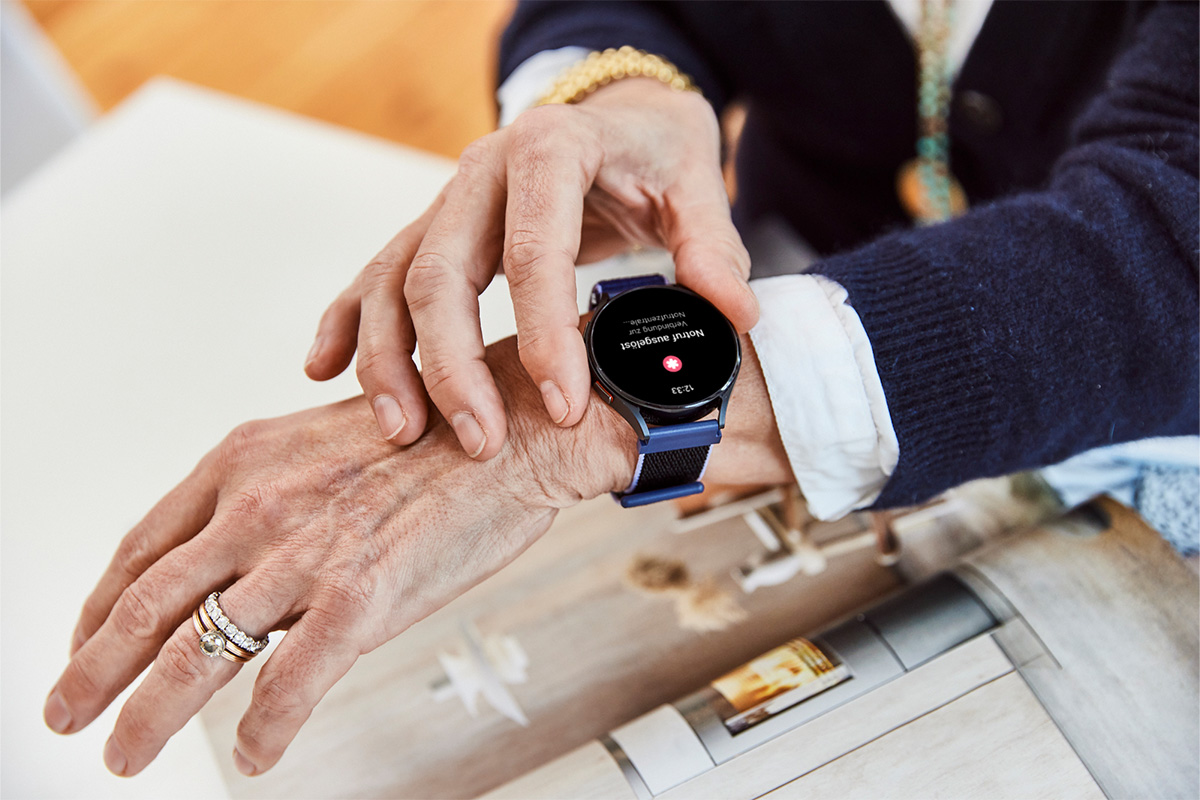

Falls account for around a quarter of all reported safety incidents in care homes. In addition, NICE states that around one-third of people over the age of 65 experience a fall at least ones a year.
- Can you tell me about yourself? Your background and why decided to move towards the startups work?
- Can you tell me about your technology and the creation of Patronus? How does it work? What is the engineering and technology behind it?
- Why did you think this product needed to be invented? What are the benefits of having this technology for consumers? How accessible is this technology?
- How does your technology stand out from your competitors?
- How has the industry responded to your technology? Have you secured any funding or recognition?
- What advice would you give to caretech or hardware focused founders out there?
- Have you faced any setbacks and how did you overcome this?
- Where do you see the company in the next 5 years?
- Anything else?
This can be a particular challenge for elderly people who are living in alms houses or are living alone but still require a carer to support them. Once they have fallen, elderly people struggle to get up or may be injured so cannot reach a telephone.
Patronus, a Germany-based startup, has developed solutions for seniors, consisting of a mobile emergency smartwatch and a family app. With 25,000 active customers and over half a million answered emergency call. The team includes 70 employees.
Ben Staudt, CEO of Patronus, sat down with CareTech World to discuss how his technology is helping vulnerable elderly patients become more independent and easing pressure on their carers.
Can you tell me about yourself? Your background and why decided to move towards the startups work?
I founded Patronus because the people who stood to gain the most from good technology were the ones it kept passing by. Before that, I’d spent years in developing business units at the German used-car platform AUTO1 Group.
The reason I started my own company was personal. My grandmother had fallen and was afraid to leave the house, and my family worried about her constantly. Meanwhile, as a 30-year-old in the city, I could order a bar of chocolate and have it at my door in ten minutes. That contrast bothered me, and I wanted to start where it mattered most, getting people help fast in an emergency. My co-founder and I started Patronus in Berlin in 2020 and launched our first product in 2021. From day one, our guiding principle has been to build around what older people need, rather than expecting them to adapt to us.
Can you tell me about your technology and the creation of Patronus? How does it work? What is the engineering and technology behind it?
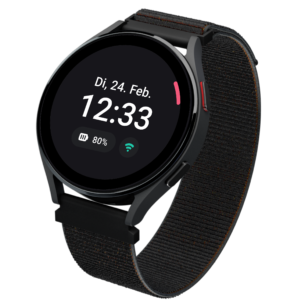
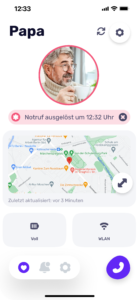
The hardest part was never a single clever piece of technology. It was building an emergency watch that older people actually want to wear and trust, one that works the moment they need it. The watch is mobile, with its own SIM card and GPS, so it works out and about and not just within range of a base station at home. The wearer doesn’t need a paired smartphone, Wi-Fi, or an app on the watch. They press one button and reach our emergency call centre, which is run around the clock by a specialist partner. Trained staff speak to them through the watch, see their location and emergency profile in real time, and decide what help to send, while the app alerts the family at the same moment.
Two design decisions matter more than they might sound. First, the SIM card isn’t tied to a single network. It switches to whichever signal is strongest, so the watch keeps working even where one provider has no coverage. Second, we built our own software layer on top of proven hardware, so the wearer only ever sees what’s relevant to them.
Why did you think this product needed to be invented? What are the benefits of having this technology for consumers? How accessible is this technology?
Emergency buttons have existed for decades, and hardly anyone wears them. Studies suggest only about 14% of owners keep them on regularly. My grandmother left hers on the bedside table and called it her nightstand decoration. So we set out to build something people would actually be glad to wear, so help is there if anything happens. Today most of our users wear the watch every day.
For families, that means peace of mind without checking in constantly. A daughter in Munich whose mother lives alone in Hamburg can open the app, see that her mother went for a walk this morning, and get on with her day, instead of ringing to check every evening. We also work hard to make getting started easy. You can try the watch with no obligation, setup is simple, there’s a test emergency call during on-boarding, and we take care of the insurance paperwork behind the scenes.
How does your technology stand out from your competitors?
Most of the category competes on features. Consumer smartwatches are built for tech enthusiasts, not for an 82-year-old who has never owned a smartphone. We compete on something simpler, whether people actually wear the thing. The longest feature list in the world is useless if the watch ends up in a drawer. Around 85% of our users wear theirs every day, far above the industry average. That comes down to design. We built it to look like a wristwatch, not a medical device, and made it easy to live with. It’s also mobile and standalone, not tied to a base station at home, so it works when people are out and about, which is often when an emergency happens. The family app keeps loved ones connected without being intrusive. Competitors can’t easily copy that combination.
How has the industry responded to your technology? Have you secured any funding or recognition?
The clearest answer is that people actually use it. More than 25,000 older adults use Patronus, and we have answered over half a million emergency calls on their behalf. In April we raised €11 million in growth funding, led by 3TS Capital Partners, with Grazia Equity and our existing investors joining. That puts us among the better-funded AgeTech companies in Europe, and we are the digital market leader for mobile emergency response in Germany.
The investor interest says less about us than about the demographics. Germany is ageing fast, with fewer family members around to provide care and more people who want to stay in their own homes for as long as they can. That’s exactly the kind of need digital products are well placed to meet.
What advice would you give to caretech or hardware focused founders out there?
Talk to the people you’re building for, and don’t stop once you’ve launched. What surprised us early on was how differently older people and their families weigh the same product. Relatives tend to want a problem solved. Older people, who very often make the decision and push for it themselves, want something they feel good about wearing every day. Design for that and you win both over. Design only for the family and you end up with a product that sits in a drawer.
The same discipline applies to hardware. We didn’t build a hardware team on day one. We ordered thirty smartwatches, put them in the hands of older people we knew, and let them pick the winners, which let us get a good product to market fast and earn the right to build a better one. Above all, aim to make later life feel good, not clinical. Ease of use and design aren’t decoration here. They decide whether people stick with a product or abandon it.
Have you faced any setbacks and how did you overcome this?
The hardest part was never building the watch. It was getting someone to try something new. A lot of older people are wary of unfamiliar technology, so we made starting as painless as we could. You can send it back if it doesn’t suit you, the setup is simple, and we stay close if anyone has a question. The trickiest thing to get right was the emergency button itself. You want it easy to press in a real emergency but hard to set off by accident, and finding that balance took round after round of testing.
Where do you see the company in the next 5 years?
We want to move from a reactive emergency product in Germany to a proactive everyday one, first at home and then internationally. What we got right early was adoption. Older people didn’t just buy the watch, they wore it every day, and that’s rare in this market. It gives us a strong foundation to build on.
Our call centre colleagues notice that a lot of calls, especially around the holidays, come from people who mainly want someone to talk to. Loneliness is the next problem we want to tackle. So we’re doing more around family connection and well-being, including an AI companion we’re currently testing with a small group of customers. It’s built mainly around voice. For this generation, voice is the natural way to interact. Many grew up on the phone, so talking feels far more natural than typing. It’s there to support people and their families, not to stand in for the relationships in their lives.
Longer term, we want Patronus to become a trusted part of everyday life as people age, not just something you reach for in an emergency. We’ll expand beyond Germany over time, since ageing is a worldwide challenge, and we’ll let what we learn from customers set the pace.
Anything else?
Only that the opportunity is bigger than most people assume, and that it rewards patience. The companies that will matter here are the ones older people are glad to use every day, not the ones with the longest spec sheet. That’s what we’re building, one step at a time.
For more caretech news, check out the other articles on the website, and for more information please email us at roshini.bains@starmediaservices.co.uk